

Soteriology can be studied on the basis of free will or predestination that represent human responsibility and the doctrines of grace. While one side is based on our own comprehension, the other is about a command from God, so how can we proceed faith without being controlled by the law or willpower?
John Calvin explained how we are drawn by God to believe in him based on predetermination. His interpretation of the Bible and other writings led him to support that in five points. The five points of Calvinism, also known as reformed theology, can be abbreviated as an acronym for T.U.L.I.P., written after the Luther, Augustinian theory against Pelagianism.
Luther prompted most of the reformers to oppose free will by yielding to God’s sovereignty. Those included Huldrych Zwingli, Theodore Beza, William Whittingham, and their successors who, after trying to purify the Church of England from its practices, resulted in a reformed Anglican church established in America. That was one of the first Protestant sects to exist in America based on reformed puritan theology.
Not all fundamentalists would become part of the reformed tradition, but the Puritans understood Calvin’s tenets by reading his book titled, The Institutes of the Christian Religion. As they became leaders of the new age Revolution, his doctrine would be taught in many Protestant churches, including Presbyterian and Reformed Baptist. The five points of Calvin’s T.U.L.I.P. include:
- Total Depravity
- Unconditional Election
- Limited Atonement
- Irresistible Grace
- Perseverance of the Saints
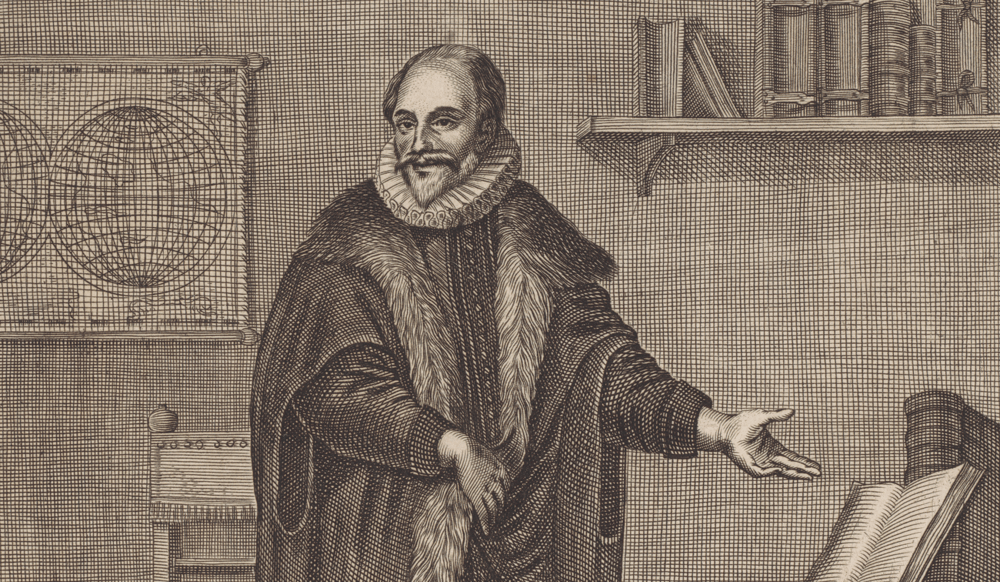
However, late in the 16th-century, Dutch theologian, whose name was Jacob Arminius, responded to Calvin with the contrasting view called “Arminianism.” While Calvin believed in complete inability, Arminius argued that man does have the freedom to choose and can resist his grace (or is prevenient in nature). The means of salvation is provided by Christ’s atoning death for the entire human race in Arminianism. Although the entire human race is not part of the church, his atonement is made fully effective. In Arminianism, though, people can turn away or fall away from grace and lose their salvation. Where in Calvinism, believers will persevere to the end, and by remaining steadfast in faith, God may finish the work he began.
More people tend to disagree on Calvinism with Arminianism being the more popular belief. You may have the ability to choose what you believe in Arminianism based on your own conscience. If our situation depends on self-determination, then we of human understanding have been given the privilege to choose and the opportunity to overcome our future.
Arminians may want to seek an advantage over unbelief by making positive choices. But choices do not affect our belief, rather belief affects the choices we make. They believe that everyone has an equal chance on the earth’s scale, which may contradict the point of God, his way of drawing us near. We’re all created equal, but the world exhibits inequality that must be divided by him. Whether we are predestined can be further studied through biblical hermeneutics.
At the crucifixion, which God had foreordained to happen, does in itself, render Christ innocent by placing the blame on the choices of godless men. They freely chose to persecute the Son of God, but at the same time, he did decree for him to undergo the penalty for sin, just as it was prophesied in the Old Testament. Though he was crucified in the most evil way, he did it for the good of his people, so evil can be used for God’s own purposes. While he is not the efficient cause of evil, he is the final cause and can intervene any way he wants.

In the book of Acts, Saul was on his way to Damascus and was struck by lightning when the Lord spoke to him, saying, ‘. . . Saul, why do you persecute me,’ causing him to go blind for three days. That could give us more insight into Calvinism by him being God’s intended example. Therefore, Saul was not only blinded by chaos; he was removed sight physically to be restored spiritually as one of his chosen, elected people.
Paul wrote that we are adopted as sons based on his good pleasure and will (Ephesians 1:5), and we’re elected according to his foreknowledge before the foundations of the world (Peter 1:2). If He were unable to elect based on his own discernment, all authority would rest on man to please God who, even himself [Jesus] had to obey the father. We cannot control God by our own authority; but rather, he offers forgiveness and compassion to whoever he desires, without human will or exertion (Romans 9:15).
The Origin of Evil
However, if he sought others damned as a result of Adam’s sin, would this make God the author of evil? He did not coerce the fall of Adam but He may have chosen to allow it within his own divine providence. Because of Adam’s fall, Satan intercedes by obeying God’s command that sin has plagued the earth. The fall happened because of man’s refusal to obey God after he ordained disobedience. We were then born into corruption until we’re redeemed in Christ and become incorruptible.
Our inability to fall from God can be proven by what scripture says: “To be born again, not of corrupt but of an incorruptible seed, that we obtain through his enduring word” (Peter 1:23). Those of corrupt seed are depraved under Adam by their natural desire against him.
Romans does explain that salvation is for everyone in section 5:18: “Just as one man’s sin was to condemn all, one man’s act of righteousness was to rescue all, and he desires all to come to the knowledge of the truth” (see also Timothy 2:4). While not everyone comes to know the truth despite what Paul articulated, Romans 11 says, “There is a remnant according to the election of his grace before the earth was made.” So how can his atonement be for everyone when the earth does not last? Any choice we may have must be up to his own divine will, so he cannot be controlled by the world.

 Bible outlook
Leave a reply to Barabbas Me Cancel reply